
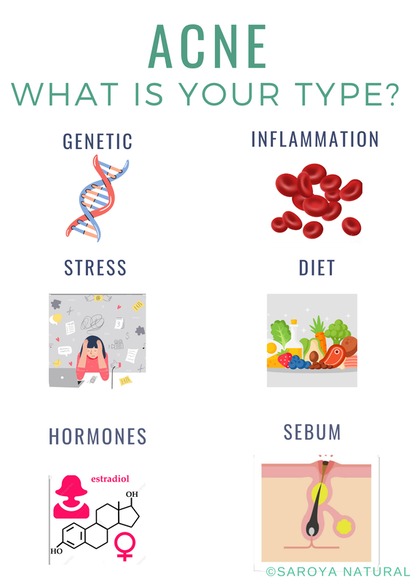
 Do you, or your loved one, suffer from acne? Do you feel like you've tried everything but nothing seems to work? There's good reason why most acne products don't work. The fundamental issues are:
What is acne? Acne is characterized as a chronic inflammatory disease. It presents as closed or open comedones - i.e. whiteheads and blackheads - and inflammatory lesions - i.e. pimples, nodules, pustules. Typically acne is prevalent in young adults with girls being affected at a younger age (average 12 years) than boys (average 15 years). Adults also suffer from acne, typically women, due to hormonal issues. Since acne is characterized as a disease, it is a medical condition. Causes of acne There are multiple factors that cause acne. Below are a few well known ones:
Current treatment for acne Modern treatment of acne falls under four categories:
By far, the most common treatment is topical - i.e. products applied on the affected area. The current practice for treating acne combines multiple methods and ingredients in the hope that one or more of them will address the patient's particular acne. The major drawback of such an approach is side effects of using too many products, bacterial resistance to antibiotics rendering them ineffective, and expense involved in buying multiple products. Ayurveda and acne Given how ancient Ayurveda is, it is quite remarkable how many of the modern acne pathways it covers. Below are various causes of acne that are addressed in Ayurveda:
In summary, both modern scientific research and Ayurveda point to multiple factors that cause acne. Therefore the most effective solution is one that is customized to your particular TYPE of acne. While there are many over the counter products for acne, you need to understand the cause of your particular type of acne and the ingredients that are suitable to address it for the products to be effective. The concentration of the active ingredients is also crucial in the efficacy of the products. The Ayurvedic approach offers the following benefits:
Sources:
https://www.ncbi.nlm.nih.gov/pmc/articles/PMC6560440/ https://www.ncbi.nlm.nih.gov/pmc/articles/PMC3051853/ https://www.ncbi.nlm.nih.gov/pmc/articles/PMC3780801/ https://www.ncbi.nlm.nih.gov/pmc/articles/PMC2835906/ https://www.aad.org/member/clinical-quality/guidelines/acne https://www.ncbi.nlm.nih.gov/pmc/articles/PMC6360964/ https://www.jidonline.org/action/showPdf?pii=S0022-202X%2815%2930101-9 https://www.ncbi.nlm.nih.gov/pmc/articles/PMC3366450/ https://www.mdpi.com/1420-3049/21/8/1063 https://www.researchgate.net/publication/330243222_Review_on_Yuvanpidika_Vis-A-Vis_Acne_Vulgaris
1 Comment
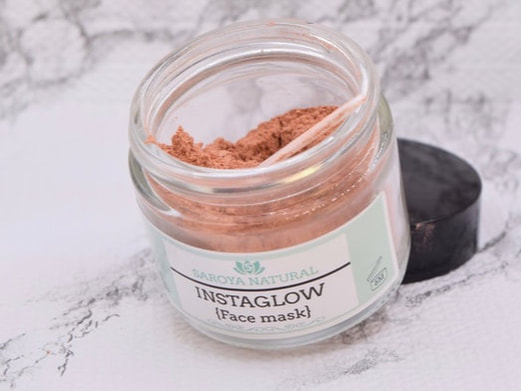 We all love facials - the ritual of steaming, masking, pore cleansing, facial massage. Blackhead removal - not so pleasant. I'd love to hear what you like about getting a facial! Please share.
However, I bet here's something you didn't know. If you are dark skinned, blackhead removal can actually do more damage to your skin. Why? The curse of pigmented skin is its very easy tendency to scar. Squeezing out blackheads bruises skin and tends to leave behind scars that last forever. Remember that next time someone tries to de-blackhead you! So what can you do? First we need to understand blackheads. Blackheads are caused by two things: excess sebum (oil) and debris like dead skin cells. When the opening of a hair follicle gets clogged by these two, a comedone (bump) develops. If the bump is above the skin surface, it gets oxidized resulting in a blackhead. If the bump is below the skin's surface, it is a whitehead. If the comedone gets infected by bacteria, it is a pimple. There's a lot of hooey stuff on the internet with no scientific backing about how to manage comedones and acne ranging from "non-comedogenic" products to oil cleansing. If we were to address the root cause of blackheads, we need to control the amount of sebum produced and prevent the accumulation of dead skin cells. How can we do this? Turns out that controlling the sebum production is not easy - it is dependent on hormones which are a bit tricky to manage. We can do something about removing dead skin cells. This is a good review published in a scientific journal about methods to manage acne including alternative therapies. The paper indicates that clay masks are effective in clearing out dead skin due to clay's excellent absorptive and adsorptive properties. This paper also indicates the benefits of using clay masks for mild acne although it was sponsored by a company that makes and sells clay!!! There are different types of clay to use. Examples are Bentonite, kaolin, French Rose, French Green, Fuller's earth (Multani Mitti) ... In general the French clays and Kaolin clay are gentler and less drying. Here's what you need to know about applying a clay mask: 1) Cleanse face first 2) You can use water, yogurt, honey, apple cider vinegar as your liquid medium depending on the type of clay and your skin type. For example, bentonite clay is alkaline and it is best to use an acidic liquid like apple cider vinegar to mix your mask. If you are a Vata type person, honey will be a good choice and not dry out your skin. When in doubt, just use water. 3) Test your skin to sensitivity. If your skin is sensitive, apply a thin layer and leave on for 5-10 mins and wash off. If your skin is not too sensitive, you can leave the mask on for longer. According to Ayurveda, you should not leave the mask on beyond the point that it is just completely dry. 4) Frequency of application - no more than once a week depending on how your skin likes it. Some other helpful tips to manage blackheads: 1) Cleanse your face with a mild Ph balanced cleanser, like this, no more than twice a day - morning and evening. One of the key problems with liquid cleansers are that they are very hard to completely rinse off. It is vitally important to rinse the cleanser off COMPLETELY or the chemicals in the cleanser will clog your pores. A rule of thumb is to wash your face with water 10 times after applying the cleanser. 2) Steam your face to "open" (more technically, clean) your pores once a week. 3) Minimize the number of products you use on your face. Check out our Ayurvedic face mask that is blended with the best skin nourishing botanicals. This product has rave reviews from our customers! Lastly and most importantly - let your confidence make you beautiful, blackheads or not. Don't obsess - just follow these simple hygiene tips, eat sensibly, and live your life! |
|
 RSS Feed